Industrial mixers – types, operating principle
and mixing efficiency
Check out previous
news
-
 Industry Day 2026 in Rzeszów - summary of RStechnology's participation
 -
Welding Engineering students from the Rzeszów University of Technology visit RStechnology
-
 Industry equipment for the production of juices and concentrates
 -
Vacuum evaporator - an irreplaceable device used for the production of sauces and concentrates
-
How does the implementation of an industrial project at RStechnology proceed from design to installation and commissioning?



Industrial mixers – types, operating principle and mixing efficiency
An industrial mixer can be found in almost every modern production line. And contrary to appearances, it’s not just a “large bucket with a mixer.” This device is responsible for combining ingredients, achieving a uniform consistency, and ensuring product consistency. Whether operating in the food, chemical, or pharmaceutical industries, the right mixer selection has a direct impact on the quality of the final product and production efficiency.
Why is mixing important?
The primary function of a mixer is to combine various components uniformly, quickly, and consistently. Optimal flow, mixer shape, and operating parameters allow for shorter processing times, reduced raw material losses, and improved chemical, physical, and sensory properties of the final product.
Dough Mixer – Efficiency and Ergonomics
A dough mixer is essential in professional baking. It’s the perfect tool for preparing light sponge cake mixtures or heavy bread doughs, among other things. Equipped with a powerful motor and a robust stainless steel construction, it guarantees fast mixing of even large batches. The mixer also features interchangeable paddles and an intuitive control panel. This makes the mixing process both quick and user-friendly.
Precision in Beverage Production with a Liqueur Mixer
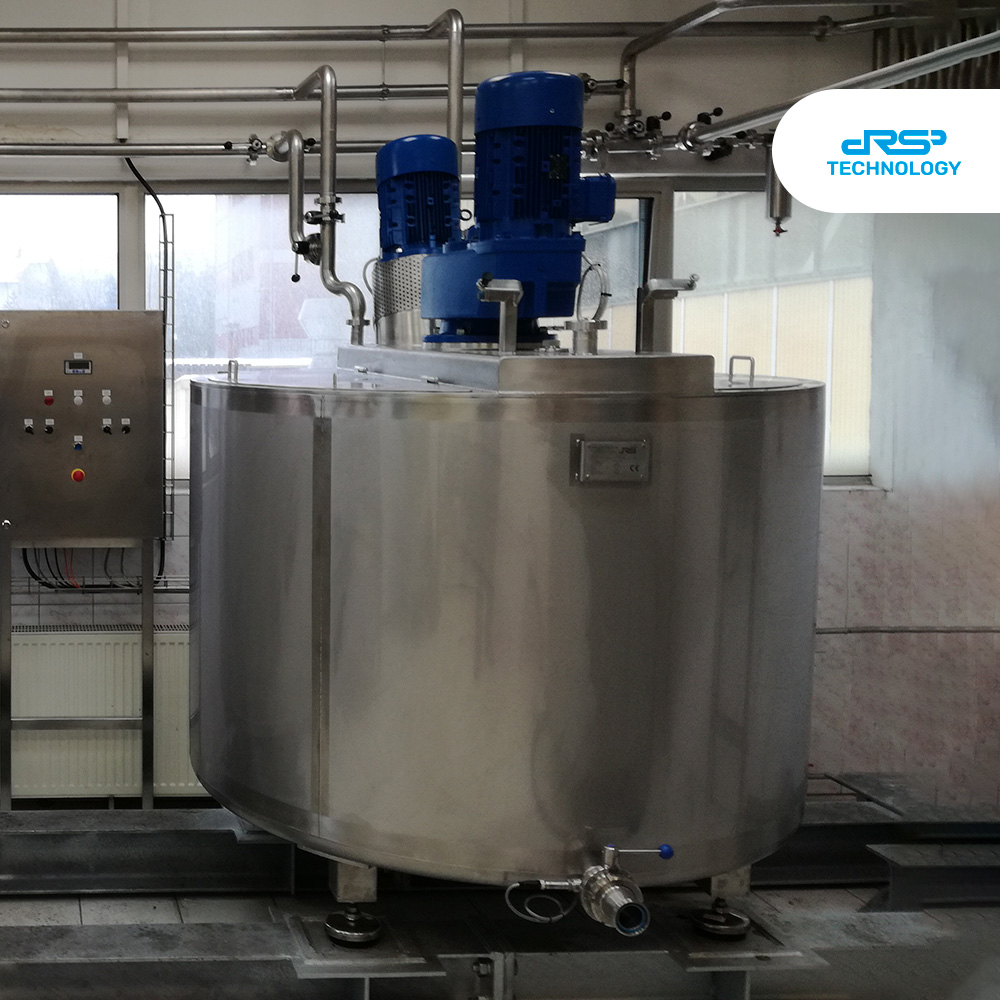
Liqueur production requires precise combination of all ingredients and gentle mixing. It’s crucial not to disrupt the aromas and consistency of the finished product. The liqueur mixer features a modern mixing system that allows for precise speed control and ensures a uniform consistency in each batch.
Ribbon Mixer – Ideal for Free-Flowing and Semi-Liquid Mixes
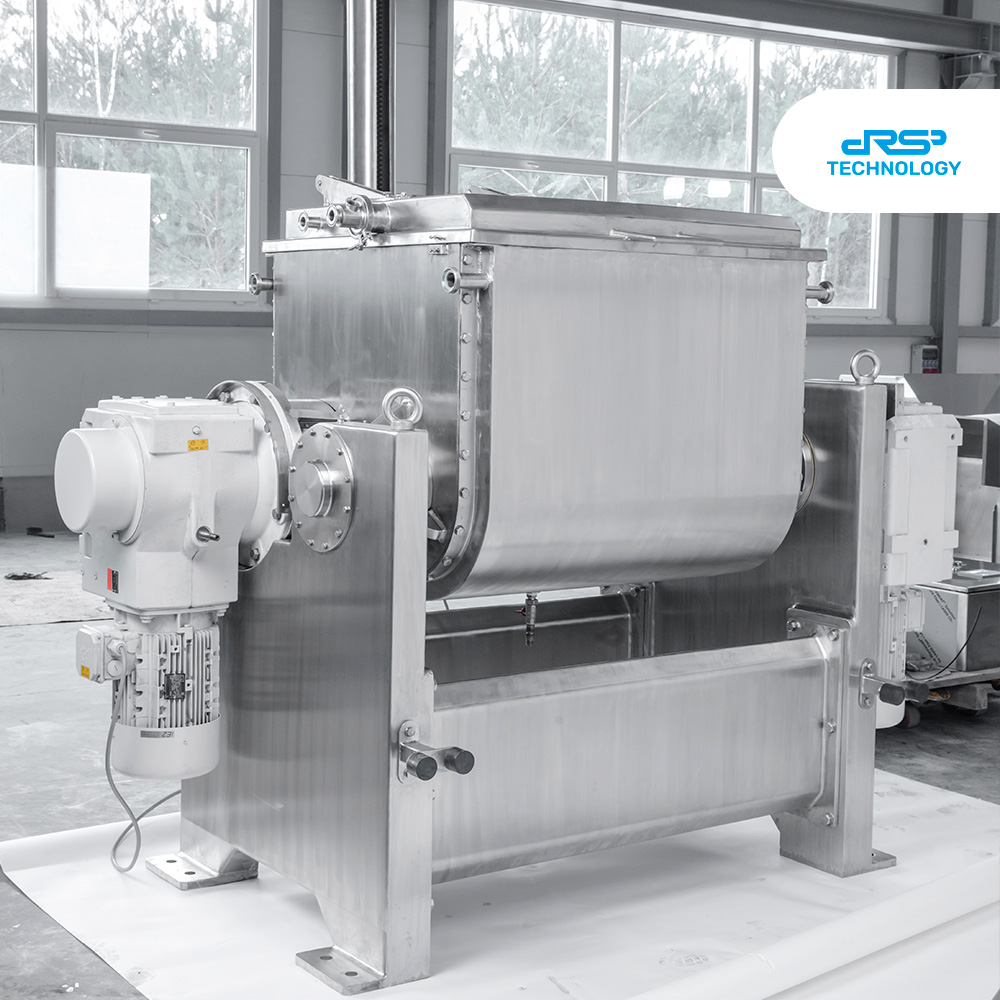
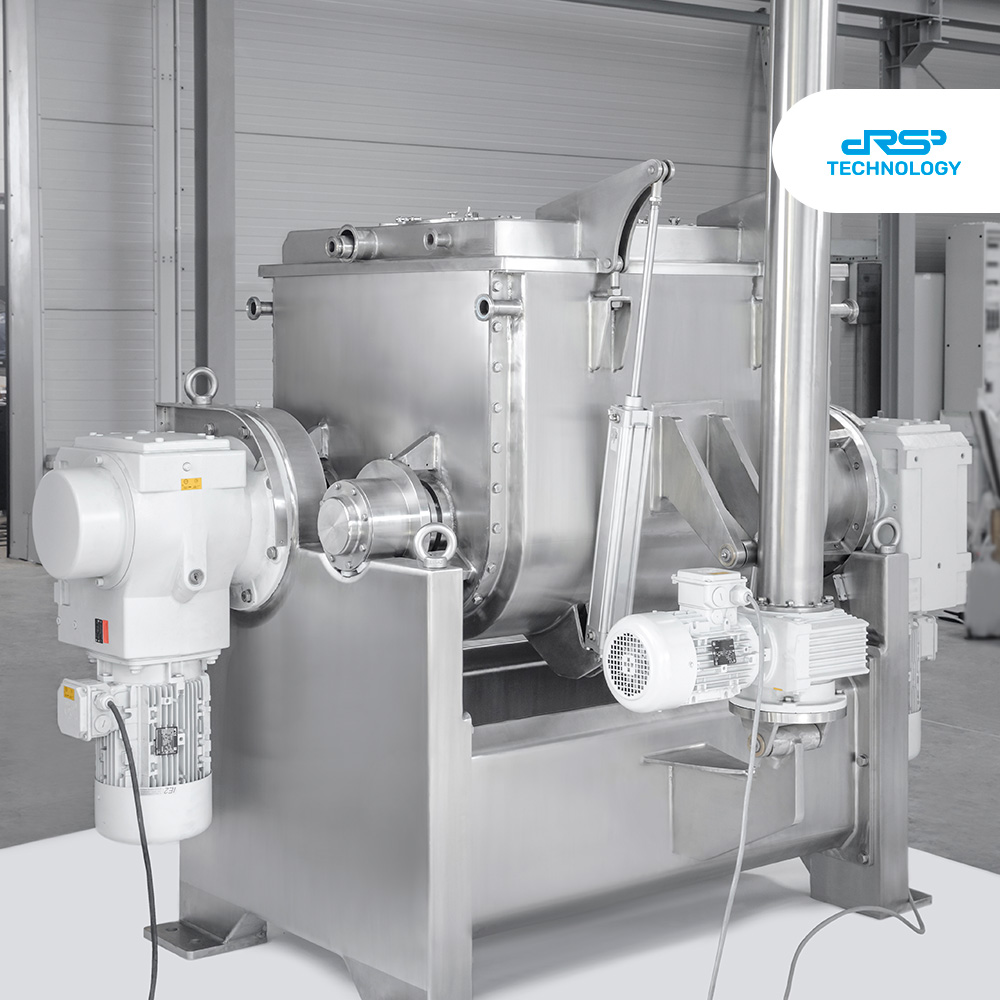
A ribbon mixer handles a wide range of materials, such as powders and thick liquids. The special design of the mixing ribbons ensures efficient mixing of ingredients without dead zones, allowing for a uniform mix in large batches. Its robust construction and easy maintenance make this type of mixer popular in industrial food and chemical production.
Z-Type Mixer – Intensive Mixing of Demanding Products
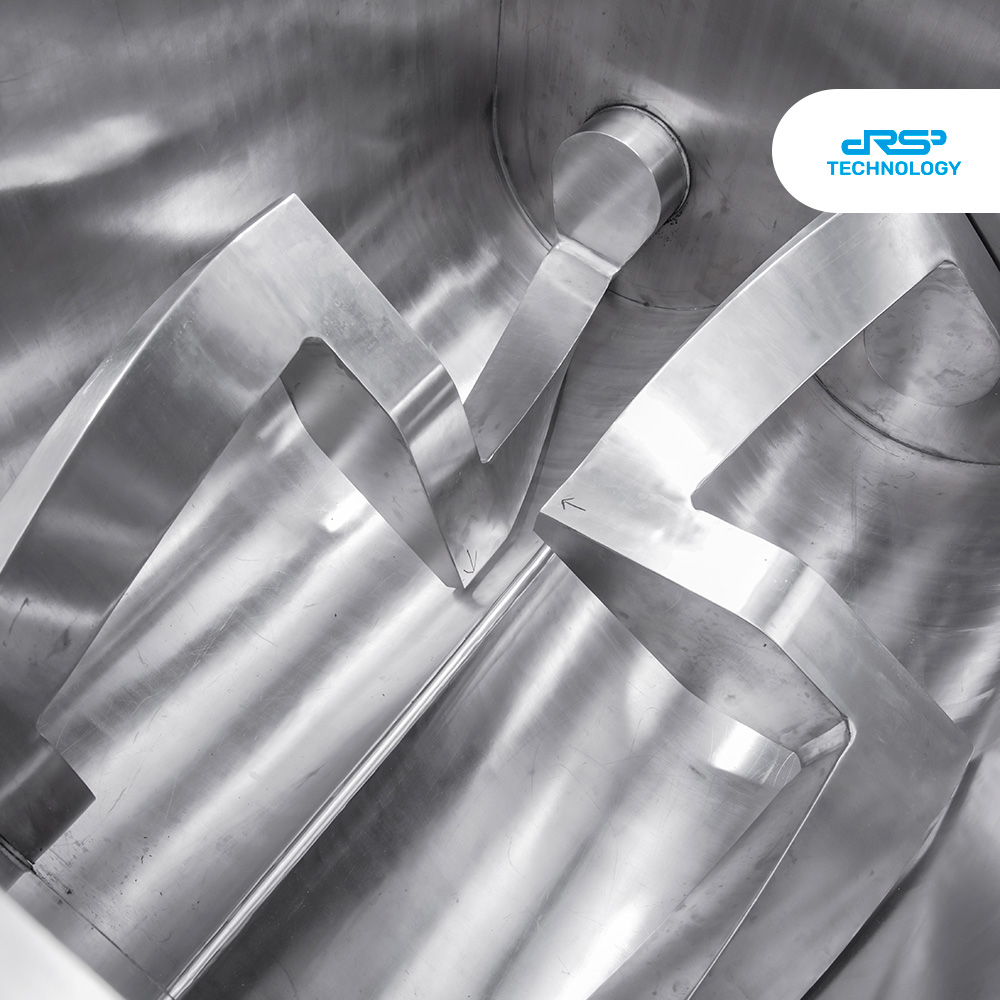
When the process requires even greater intensity and precision (e.g., with very thick or viscous materials), a Z-Shaped mixer is ideal. It features a unique Z-shaped blade arrangement, which makes mixing even the most challenging substances highly effective.
How does mixing efficiency affect the production process?
A properly selected mixer means shorter production cycle times, lower energy and raw material consumption, and above all, better quality of the finished product. This applies to both its structure and the repeatability of parameters. Well-designed equipment allows for the optimization of the entire technological process, eliminating often costly production errors.
And that’s where we, RStechnology, come in. We offer a wide range of mixers tailored to various production needs. Our offerings include modern equipment, including:
Our solutions are distinguished by their robust stainless steel construction, modern mixing technologies, and the ability to customize operating parameters to meet specific requirements. We invite you to contact us and explore industrial mixers from RStechnology.
